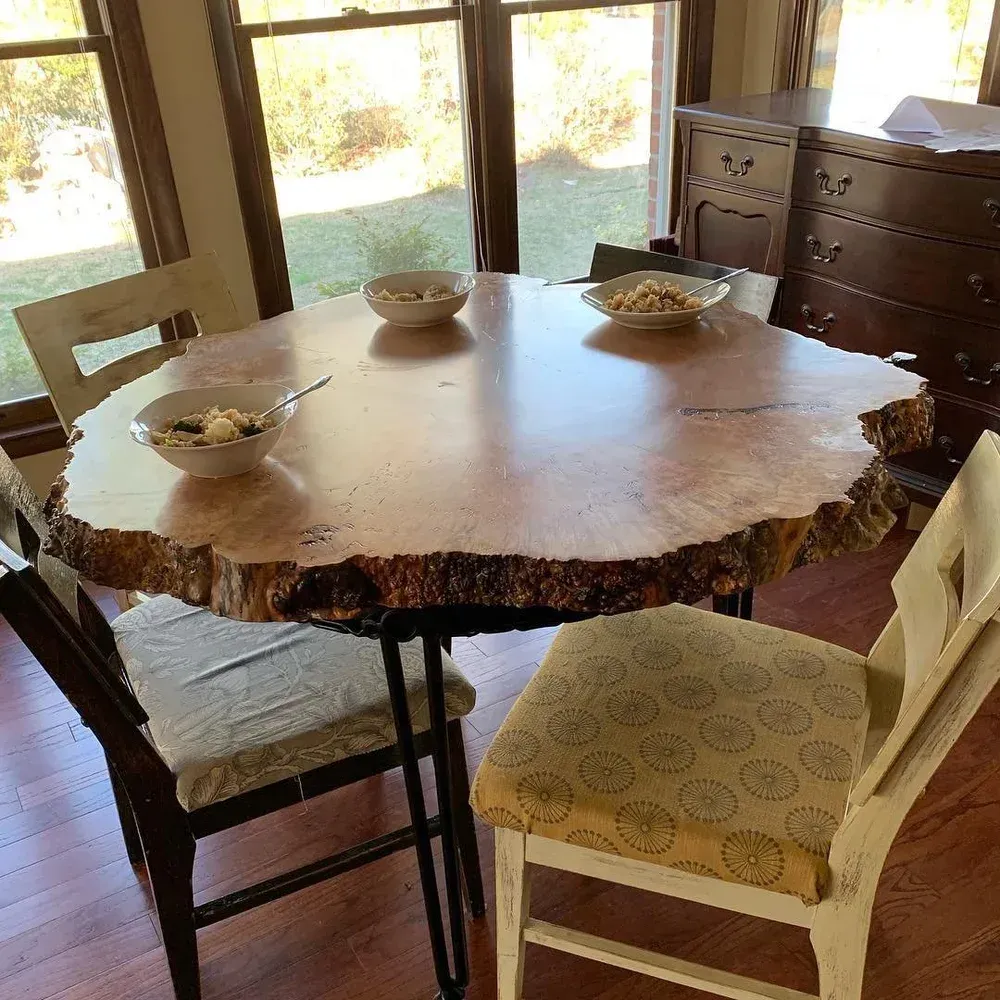
How to Choose the Right Table Size for Your Space
How to Choose the Right Table Size for Your Space
Selecting the right table size is one of the most important—and most overlooked—decisions when designing a room. Whether you’re investing in a dining table meant to host generations of family gatherings or a statement piece for a living space, scale and proportion will determine how the room feels and functions long before finish or style ever come into play.
The goal is balance: a table should feel intentional and grounded, not cramped or lost.
Start With the Room, Not the Table

Before looking at table dimensions, measure your room carefully. This includes length, width, and any architectural features such as doorways, windows, fireplaces, or built-ins. A good rule of thumb is to allowat least 36 inches of clearancearound all usable sides of a table. This space allows chairs to slide back comfortably and people to move naturally without squeezing past furniture.
In more formal dining rooms or high-traffic areas, increasing that clearance to 42–48 inches creates a noticeably more comfortable experience.
Dining Tables: Seating and Proportion
When choosing a dining table, think in terms of both daily use and special occasions. Standard seating guidelines are helpful:
24 inches of table length per person for comfortable dining
30–36 inches wide for rectangular tables
42–60 inches in diameter for round tables seating four to six
A common mistake is choosing a table that technically fits the room but overwhelms it visually. In smaller spaces, a narrower table with refined legs or an open base can maintain a sense of lightness while still offering ample surface area.
Living Spaces and Occasional Tables
For coffee tables, side tables, or accent pieces, proportion is about visual weight as much as size. A coffee table should generally be½ to ⅔ the length of the sofa, with14–18 inches of clearance between the table and seating. Height matters too—aim for a surface that sits at or slightly below seat height to keep the space feeling relaxed and cohesive.
Consider How You Move Through the Room

Tables are not static objects—they shape how people move. Walk the room mentally. Where do people enter? Where do they pause, sit, or gather? A well-sized table supports natural movement rather than interrupting it. This is especially important for handcrafted or bespoke tables, which often become the visual anchor of a space.
When in Doubt, Go Custom
If a room falls between standard sizes—or if you want a piece that feels truly intentional—custom dimensions can make all the difference. A table designed specifically for your space allows proportions to feel effortless, not forced. It also ensures that the table enhances the room’s architecture rather than competing with it.
Choosing the right table size isn’t about filling space—it’s about creating harmony. When scale, clearance, and proportion align, the room feels calm, functional, and timeless.

